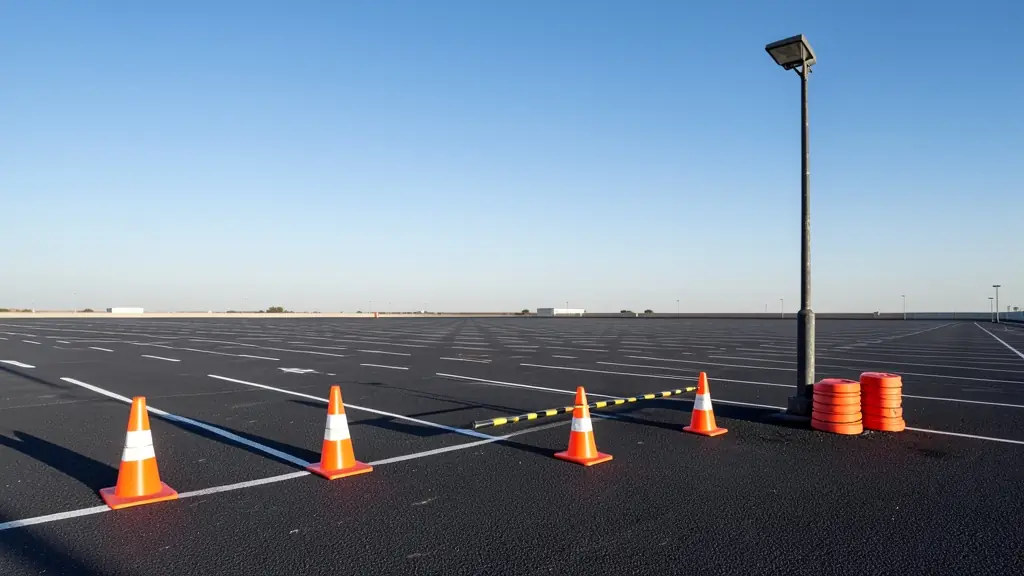
Traffic cones are the most flexible traffic control there is: cheap, light, stackable, and set out in minutes to close a lane, mark a hazard, shape a queue or keep a bay free for a delivery. The choice comes down to height, material and visibility at night, and how many you need, since most buyers order them in packs. Road works on a fast road need bigger, heavier cones than a school drop-off zone. Tell us the sizes and quantity, and we pass your request to independent suppliers of traffic safety equipment, who quote you directly.
Sizes and where each suits
Cones commonly come in three heights:
- 450 mm for car parks, schools, sports fields and indoor use
- 750 mm, the all-round size for road works, security and events
- 1 m for faster roads, highways and places they must be seen from far off
Taller cones are seen sooner and blow over less if they have a heavy base. A mix is common: a contractor might keep 750 mm cones for everyday work and a few 1 m cones for the taper on a busy road.
PVC or rubber, and the base
PVC cones are light, bright and cheap, stack easily and suit most jobs. They can crack when driven over and fade in strong sun. Rubber cones, or cones with a heavy rubber base, cost more but stay put in wind and the suction of passing trucks, and they usually survive being run over. Whatever the type, check the base weight, because a cone that blows into the road is worse than no cone. Ask whether the base is separate and can be replaced. On gravel or uneven ground, a wider base also helps a cone stand upright.
Reflective sleeves, lights and cone bars
For any cone used after dark, ask for reflective sleeves, white or silver bands that shine back in headlights. Clip-on lamps help on road works at night. Cone bars are light poles, often yellow and black or red and white, that link two cones into a low barrier; they mark a closed area more clearly than cones alone. For a longer or heavier line, pair cones with road barriers, or use flexible delineator posts where a line must stay for months.
Packs, quantities and storing them
Cones are usually sold by the unit with better prices in packs. Count what you set out on a typical day and add spares, because cones get lost, flattened and borrowed. Some buyers mark their cones with paint on the base so they come back after a shared job. Stack them out of the sun when not in use to slow fading. For a permanent fix at a school or car park, speed humps and parking bollards do the job without someone setting out cones every morning.
What to put in your request
- Height: 450 mm, 750 mm or 1 m
- How many, and whether in packs
- PVC or rubber, and base weight
- Reflective sleeves, lamps or cone bars
- Delivery address
Traffic Cones for homes, businesses and public spaces
- Homeowners: a few small cones to keep the verge clear during a building job or party
- Estates, complexes and body corporates: cones for the gatehouse to guide visitors and close roads during repairs
- Shops, malls and petrol stations: cones closing bays for deliveries, cleaning or car park works
- Offices, hotels and car parks: cones in an office car park for visitors, events and maintenance
- Warehouses, factories and depots: cones marking spills, loading zones and temporary routes in a yard
- Municipalities and public spaces: cones for road maintenance teams, events and emergency closures
- Schools, hospitals and campuses: cones shaping the drop-off loop at a school or closing a campus road
- Contractors and event organisers: packs of 750 mm and 1 m cones for road works and lane closures
Frequently asked questions
Do you sell traffic cones yourselves?
What size traffic cone do I need?
Do traffic cones need reflective sleeves?
What should I put in a cone order request?
Traffic Cones by province and city
- Johannesburg
- Pretoria
- Centurion
- Midrand
- Sandton
- Randburg
- Roodepoort
- Krugersdorp
- Randfontein
- Germiston
- Boksburg
- Benoni
- Kempton Park
- Alberton
- Vanderbijlpark
- Vereeniging
- Durban
- Pinetown
- Pietermaritzburg
- Richards Bay
- Newcastle
- Ladysmith
- Gqeberha (Port Elizabeth)
- East London
- Kariega (Uitenhage)
- Mthatha
- Cape Town
- Bellville
- Paarl
- Stellenbosch
- George
- Worcester
- eMalahleni (Witbank)
- Middelburg
- Secunda
- Mbombela (Nelspruit)
- Rustenburg
- Brits
- Klerksdorp
- Potchefstroom
- Mahikeng
- Polokwane
- Tzaneen
- Kimberley
- Upington
- Bloemfontein
- Welkom
- Sasolburg