
Defining Bollards and Their Core Functions
What Exactly Is a Bollard?
At their essence, bollards are unassuming guardians of the everyday landscape. They are short, sturdy vertical posts that dictate the flow of both vehicles and people, yet their quiet presence often goes completely unnoticed. The fundamental question of bollards what are they is answered by observing their function: they are the physical manifestation of boundaries. They decide where a car can go and where a pedestrian feels secure, shaping our shared spaces with an authority that relies on mass rather than enforcement.
These structures manage risk and define the architecture of our environment. They are not decorative afterthoughts, but rather deliberate tools for order.
– They separate traffic from public plazas.
– They shield storefronts from accidental or intentional impacts.
– They channel foot traffic into designated crossings.
There is a fascinating psychology at play. A bollard does not argue or shout; it simply exists, a fixed and silent rule that we comprehend in an instant. This silent negotiation between human intention and engineered restraint is what makes them so effective. They offer a sense of safety that is felt, not thought about, a deep-seated acknowledgement that our daily movements are guided by these stoic markers of control.
The Role of Bollards in Modern Urban Infrastructure
A single bollard at the V&A Waterfront in Cape Town stands as a quiet testament to the delicate art of coexistence. It is a simple object, a short and sturdy column, yet it carries the weight of urban order. To ask bollards what are they is to look beyond the steel or concrete, and see a definition rooted in purpose. They are the tactile instruments that negotiate the boundary between the momentum of a vehicle and the vulnerability of a pedestrian, a relationship that South African streets know all too well.
The core function is a form of silent governance. These posts manage the physical space with an authority that does not shout. Their utility is profound, acting as the first line of defense for public squares and the final barrier for a shopfront. They also direct foot traffic with a mundane genius, creating pathways that feel intentional and safe. Consider their protective roles:
– They absorb impacts that could otherwise turn a pavement into a hazard.
– They delineate public spaces without the need for signage or guards.
– They form a permanent rule in a landscape of temporary decisions.
In the sprawling narrative of modern urban infrastructure, bollards are the punctuation marks in an otherwise chaotic sentence. They are the discreet protagonists in the story of a city’s flow, ensuring that the bustle of a Johannesburg business district or the tranquility of a coastal promenade remains uninterrupted. Their quiet authority shapes the rhythm of daily life, a fixed point in a world of constant motion, proving that the most effective boundaries are often the ones we simply accept and walk past without a second thought.
Separating Vehicles and Pedestrian Spaces
To ask bollards what are they is to observe them at a curb. They are the fixed posts that partition a roadway from a footpath. This separation is not decorative. It is a blunt, practical arrangement that reduces the chance of collision. A driver sees a line of bollards and understands the boundary. A pedestrian sees the same line and feels the security.
Their core function relies on placement and visibility, and I have seen this work in South African townships. Consider how they operate:
- They create a physical buffer between car traffic and walking zones.
- They prevent shortcuts across plazas and corners.
- They maintain a clear edge for both driver and pedestrian.
Every bollard enforces this split with no words. That silence is what makes them effective.
Protecting Critical Infrastructure and Buildings
We might ask bollards what are they when they guard something more consequential than a pavement. These posts shield essential structures. They stand between a bank’s glass facade and an errant vehicle. They protect transformer boxes, government buildings, and power substations. Their presence is a quiet admission that accidents happen.
Consider the practical measures involved:
- They absorb impact before a vehicle reaches a wall.
- They create a setback that gives security personnel time to react.
- They define a perimeter without the heaviness of a barrier wall.
A bollard’s strength matters less than its placement. A single misplaced post offers false confidence. In South Africa, load shedding has made substations frequent targets of opportunistic damage. Bollards limit access to these vital nodes, ensuring that neighbourhoods retain power. When we ask bollards what are they, the answer depends on what they protect: sometimes a walkway, sometimes a national asset.
Exploring the Different Categories of Bollards
Fixed Bollards for Permanent Barriers
Picture a line of unyielding steel, sunk deep into the earth, watching the chaos of a busy city street. These are fixed bollards, the absolute choice for engineers who need a permanent answer. They do not bend or break. They stand as an unwavering contract between the municipality and the public. A concrete plinth a meter tall will shrug off a rogue SUV, while a heavy steel pipe redirects a wayward truck as if it were a leaf. This is not temporary management; this is a geological statement.
When you secure a public square or a loading bay, you are not merely placing an obstacle. You are establishing a permanent rule of law for the space. Fixed solutions often involve deep foundations, which make them incredibly difficult to remove or compromise. Their reliability is their greatest asset, but their permanence is also their limitation. Once poured and set, they dictate the traffic flow for decades to come. Consider the core characteristics that define this category:
– They are typically embedded directly into a concrete footing, offering immense shear strength.
– They require zero daily maintenance or manual operation, unlike their retractable cousins.
– They offer a psychological deterrent that is far stronger than a painted line.
So, to answer the question of bollards what are they, in this context, they are the silent, unblinking guardians of your permanent infrastructure. They are the most honest form of security, visible, hard, and utterly without compromise. When hybrid solutions or temporary barriers are too fragile, and the risk is too high, the fixed bollard provides a finality that cannot be questioned. It is the difference between a suggestion and a sentence. The flexibility of a removable post is nice, but does it offer the same promise of absolute protection? What are they, if not the physical manifestation of an immovable boundary?
Removable and Retractable Bollards for Flexible Access
The permanence of a fixed post offers clarity, but urban life demands a more nimble approach. This is where the chameleons of the access control world step in. Retractable bollards offer a unique duality, possessing the strength to halt a two-ton vehicle at a moment’s notice while vanishing into the pavement to allow a delivery van through. They are the practical solution for spaces that need to serve multiple functions throughout a single day.
Consider the mechanics at play. A hydraulic or pneumatic system drives the post deep into a recessed housing, leaving the surface perfectly flush. This is not a simple lock and key system. It is a significant engineering feat that requires a dedicated power supply and a control mechanism. The sheer versatility is their superpower, allowing a bustling pedestrian mall to transform into a service corridor overnight.
For those requiring occasional access without the infrastructure of underground power, removable bollards serve a distinct purpose. These are the manual workhorses, often lifted out with a unique key or a simple lifting mechanism. They offer a medium ground, a compromise that does not require electrical engineering but still provides a formidable barrier when installed. When you ask bollards what are they, the answer often hinges on this trade-off between convenience and security.
The operation of these systems typically falls into a few distinct categories:
1. Fully automatic retractable bollards, which are lowered and raised via remote control or a ground loop sensor.
2. Semi-automatic posts, which use a key to release a gas spring for lifting, but require manual lowering.
3. Removable steel posts, which are inserted into a permanent ground socket and extracted only when necessary.
Each tier of technology brings a different operational cost and level of user convenience. A busy loading dock might rely on the speed of automatic systems, while a heritage site might prefer the discreet presence of a removable socket. This flexibility is what separates them from their fixed counterparts. They provide the rule of law when needed and grant passage when necessary, without permanently altering the landscape.
Automatic and Hydraulic Bollards for High-Traffic Areas
Traffic volumes in Johannesburg and Cape Town demand barriers that respond in milliseconds. For high-traffic areas, automatic and hydraulic bollards operate without human intervention at toll plazas, bus depots, and airport terminals. This is where the question bollards what are they gains real urgency because their function lies hidden beneath the asphalt.
A hydraulic bollard uses a buried power unit to push a steel cylinder upward. The pressure stays consistent, so one unit can stop a 7.5-ton truck while still cycling every few seconds. These systems run on dedicated power supplies and often include backup batteries for load shedding. What sets them apart is speed. A pneumatic bollard rises in under two seconds, while hydraulic versions take longer but deliver greater force.
For facility managers, the decision depends on traffic flow and safety protocols. Consider the main categories:
- Hydraulic bollards with integrated pumps for continuous operation.
- Automatic bollards driven by electric motors for moderate usage.
- High-speed hydraulic posts for emergency vehicle access points.
Each category requires a controller that links to sensors, loops, or access cards. Maintenance schedules differ; hydraulic systems need monthly fluid checks, while electric units require less attention. When you understand bollards what are they in this context, you see them as active security assets rather than passive posts.
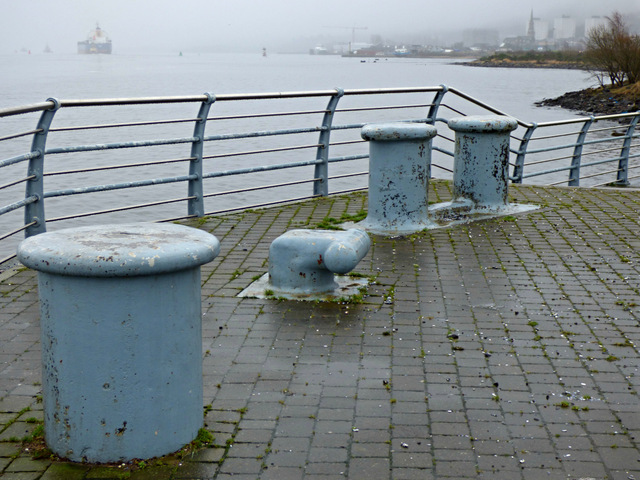
Crash-Rated Bollards for Security and Anti-Terrorism
Crash-rated bollards answer the question of bollards what are they with certified violence. South African facilities use them to stop trucks that might carry more than cargo at embassy gates, fuel depots, and substations. Each unit endures an actual collision test before it earns a rating. These are the ratings that matter:
- K4 halts a 7.5-tonne truck at 64 km/h
- K8 handles 80 km/h impacts
- K12 tackles extreme assault scenarios
Here is the catch. A crash-rated bollard is only as good as its foundation. Install it in a shallow slab and the post becomes a projectile. Trust me, nobody wants a K12 bollard flying through their reception area.
Decorative and Architectural Bollards Enhancing Civic Design
In civic design, bollards are the quiet poetry of a city, the unassuming figures that choreograph our daily movements with silent authority. These elements answer the question of bollards what are they through their very presence, shaping public realms without uttering a single word. They are the subtle boundary between the chaos of the street and the sanctuary of the sidewalk, a distinction that sculpts the character of our urban environment. A well-designed bollard does not merely stand as a stark barrier; it acts as a piece of public art, a testament to the belief that safety need not sacrifice beauty.
These architectural sentinels transition effortlessly from utilitarian posts to elegant design features. In South Africa, urban planners have embraced this duality, using finished steel, natural stone, or even robust timber to complement the surrounding architecture. Their primary function remains pedestrian protection, but their higher calling is the enhancement of the civic realm. Consider how a row of bollards can define a café’s outdoor seating area or guide visitors toward a heritage landmark and they become wayfinders in their own right. For modern designers, bollards are a palette for creative expression:
– Custom engravings or city logos that brand a district
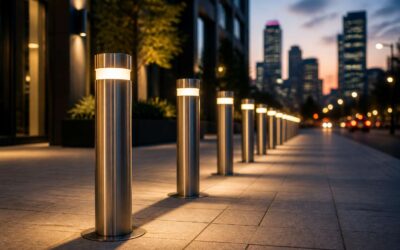
– Integrated ambient lighting for evening safety and ambiance
– Textured surfaces that reflect local artisanal craftsmanship
Whether they are installing permanent bollards or flexible ones for dynamic spaces, the choice of design directly influences the public’s perception of a place. A sleek, modern bollard suggests a progressive, forward-thinking municipality, while a classic, heritage-style post respects the area’s history. These objects are not afterthoughts; they are integral components of a cohesive urban narrative, proving that the smallest details often carry the most profound impact.
Illuminated and Low-Level Bollards for Lighting and Guidance
Ever walked a dimly lit pathway and felt your way forward? Illuminated bollards answer the old query of bollards what are they with a glowing reply. These compact sentinels do not block traffic so much as steer people through the dark. Low-level bollards cast light downward, creating a defined footprint that maps the route ahead.
In South African cities, where load shedding plunges pavements into shadow, these small lights prove their worth. They define the edge of a cycle lane, frame a stairway, or signal an entrance without adding glare to the night sky. They provide guidance without obstruction.
- Guiding pedestrians along coastal promenades without light pollution
- Marking shared zones where cars and pedestrians must coexist
- Accentuating heritage sites and landscape features
Understanding this category fully requires seeing it after sunset. That is when illuminated bollards prove their purpose, offering orientation and reassurance to every passerby.
Materials and Manufacturing Methods for Bollards
Steel Bollards: Strengths and Corrosion Treatment
Steel bollards carry a hidden weight. Roughly 80% of security barriers rely on steel, yet few people consider what makes them survive decades of coastal rain and accidental impacts. The answer lives in metallurgy and surface engineering, not just raw strength.
Manufacturers begin with hot rolled or cold drawn steel. Hot rolled offers ductility for crash rated barriers, while cold drawn provides tighter tolerances for removable systems. The real challenge starts after shaping. Corrosion treatment determines lifespan, and South Africa’s humidity demands serious protection.
- Hot dip galvanising for sacrificial zinc layers
- Epoxy powder coating for chemical resistance
- Thermal spray aluminium for abrasive marine zones
When you ask bollards what are they, the manufacturing process rarely comes to mind. Yet weld quality and steel grade decide whether a bollard bends or shatters. Grade 350 steel with full penetration welds resists moisture far better than cheaper alternatives, because surface defects trap salt and water. For coastal cities, duplex systems combining galvanising with a polyester topcoat outperform any single treatment.
Cast Iron Bollards and Their Heritage Appeal
Cast iron bollards predate steel by a full century. Early examples were recycled cannon barrels, buried muzzle down in port towns from Cape Town to London. The sand casting method still delivers decorative details that steel cannot replicate.
Ductile iron, a modern alloy, keeps the classic silhouette while improving impact resistance over grey cast iron. The casting process creates a distinctive surface texture. The metal’s natural patina deepens with age, which suits heritage districts perfectly.
Heritage districts favour cast iron for its ornamental range:
- Fluted shafts and reeded collars
- Ornamental caps with geometric or floral patterns
- Foundry marks cast into the base
For anyone asking bollards what are they, cast iron provides the clearest answer. These objects carry visible history while still managing everyday traffic.
Reinforced Concrete Bollards for Heavy-Duty Requirements
In South Africa, where the weight of a fully laden bakkie or a municipal truck is a daily reality, the reinforced concrete bollard is the silent workhorse. If you are still wondering what bollards are in the context of sheer, unadulterated stopping power, this is your answer. These are not dainty ornaments. They manage to be both brutally simple and brilliantly effective.
The magic lies in the manufacturing method. Precast concrete bollards are formed in a mould with a steel rebar cage running through the core. This internal skeleton gives them the flexing strength to absorb impacts that would crumple a lesser steel post. The concrete mix itself is often densified with aggregates to prevent water ingress, which is the primary cause of spalling in our climate. For a municipality, the appeal is purely economic. These units are cheaper to produce in bulk and require almost zero maintenance once set in a deep foundation. They are the anti-theft device of the bollard world because you are not going to walk away with a half-tonne block. They might not win beauty contests, but for a security perimeter that must not fail, they are the unglamorous, immovable answer. They are the brick outhouse of perimeter security, and frankly, they are happy with that role.
Polymer and Plastic Bollards for Cost-Effective Solutions
So you are asking, bollards what are they when the material is less armour, more adaptability? The polymer bollard is the pragmatic counterweight to that heavy concrete monolith. Instead of relying on sheer mass, these units use advanced plastics like HDPE or recycled composites. They are significantly cheaper to purchase and transport, a factor that transforms budget planning for a private estate or a retail centre.
The manufacturing process for polymer units is also cleaner. They are rotationally moulded to create a hollow core, which is then filled with water or foam at the installation site. This flexibility means they can absorb a light impact and bounce back to their original shape, a resilience steel simply cannot offer. They resist corrosion, never need painting, and are highly visible in low light.
Here is where they excel in the South African context:
– Traffic calming within private parking lots.
– Marking pedestrian walkways without a heavy footprint.
– Delineating cycle paths where a minor collision should not total a vehicle.
Because they are hollow and light, bollards what are they in terms of theft risk? They are far less attractive to criminals than a solid steel or iron unit. They are the sensible, low-maintenance choice for areas where the primary threat is a distracted driver, not a deliberate ram raid. They offer a boundary that is effective but inherently forgiving.
Recycled Materials and Sustainable Bollard Options
Consider the life cycle of a municipal project. The specification for a simple barrier often ignores where the material ends up after decades of service. The answer to bollards what are they changes when you factor in their entire lifespan. The industry is shifting towards recycled content, moving away from virgin plastics and imported steel. This is not just a trend. It matters for the local economy and the landfill site.
Manufacturing methods have adapted to use Post-Consumer Recycled (PCR) material. High-Density Polyethylene (HDPE) is a common base. It is melted down and rotationally moulded into a hollow shell. This process consumes less energy than forging steel or curing concrete. The result is a robust unit that handles the sun and rain. For a country with a growing waste problem, this is a direct intervention. You are taking a bottle that failed its purpose and giving it a second life as a traffic management tool.
The practical benefits are immediate. A recycled bollard does not rust. It does not need sandblasting or a fresh coat of industrial paint. The colour is pigmented throughout the plastic, so a scratch does not reveal a different colour underneath. This reduces maintenance costs. Consider a security estate or a shopping centre. They need to allocate budgets for upkeep. Choosing a product with a longer service life and lower maintenance needs is a sound financial decision.
Here are the key points to consider when specifying recycled units:
– Check the actual percentage of recycled content. Some manufacturers use only 30%, others use up to 100%.
– Look for UV stabilisers in the mix to prevent fading and brittleness.
– Ask about the warranty. A good recycled product should still carry a lifetime guarantee against manufacturing defects.
So, bollards what are they when they are made from waste? They are a solution that addresses traffic safety and waste management. They serve a specific purpose without the environmental baggage of traditional materials. It is about making a smart choice that acknowledges the cost of raw materials and the value of what we already have.
Installation, Placement, and Regulatory Compliance
Standard Spacing and Height Requirements for Efficacy
The real test of any bollard isn’t its material or finish, but the silent mathematics of its placement. One poorly positioned post can create a bottleneck, while a single miscalculated gap can render a whole security perimeter useless. To understand what it takes to make bollards work, you have to look at the rules that govern their position.
Principle one is setback. A bollard placed too close to a building line leaves no room for error, while one set too far back invites a vehicle to build up speed before the impact. The standard for fixed security posts is often a compromise between structural protection and urban flow. Installers must consider the turning radius of delivery trucks, fire engines, and even the occasional kombi trying to squeeze through a tight lane. On public walkways, this means maintaining clear passage for pedestrians and wheelchairs, typically requiring a clear width that complies with disability regulations. The placement is a negotiation between the architect, the traffic engineer, and the security consultant. Each site tells a different story, and the bollards simply mark the boundaries of that story.
When it comes to efficacy, spacing and height are non-negotiable. For a standard security bollard, the accepted height range is between 900mm and 1200mm. The lower limit stops a vehicle’s bonnet from riding over the top, while the upper limit ensures the driver can still see the pedestrian environment beyond. Spacing is even more critical. If the gaps are too wide, you have created a monument to futility, a decorative fence that any determined driver can simply drive straight through. The customary distance between posts should be no more than 1200mm to 1500mm to block a car’s width effectively. However, this must be balanced with the need for bicycle access and the flow of foot traffic, which often requires a wider opening at specific points. Adhering to SANS standards for impact resistance and construction quality turns a simple metal pipe into a formidable barrier.
Regulatory compliance is not about avoiding a fine; it is about accountability. In South Africa, the municipal by-laws and the National Building Regulations dictate specific requirements for bollard installation. This includes the depth of the concrete foundation, which must resist frost heave and impact shear forces. A bollard bolted to the surface is a different species from one buried deep in a concrete footing, and they perform differently under stress. The regulations exist to prevent the kind of catastrophic failure that leads to lawsuits, or worse, injuries. They require documentation and testing evidence to prove that a bollard will perform at its stated rating.
Ultimately, a bollard is a promise. It promises that a pedestrian corridor stays safe, that a storefront remains unbreached, or that a heritage building remains untouched. Without the correct installation and compliance, that promise is hollow. Getting the height and spacing right is the difference between a psychological deterrent and a physical barrier. It is the difference between trusting the paint on the ground and trusting the steel in the earth. For anyone asking what a bollard truly is, the answer lies in its secure footing and the precise gap between the posts. That is where the design meets its duty.
Surface-Mounted vs. Embedded Bollard Installations
Ask anyone what a bollard is for, and they will point to the steel post between a pavement and a truck. The answer to bollards what are they lies underground. The installation method decides whether that post is a deterrent or a dead weight.
Surface-mounted bollards attach to the paving with bolts and a base plate. They install quickly and remove cleanly. They suit temporary sites, but they rely on the slab underneath. A cracked base means a compromised post. I have seen surface-mounts fail on a loading dock.
Embedded bollards sit in a concrete footing, buried deep enough to resist shear and frost heave. This is the standard for crash-rated barriers. The ground anchors the post, and the post resists the load.
Key factors in the choice:
- Vehicle speed and weight at the location
- Ground conditions and drainage depth
- Future access needs and removal requirements
South African regulations require documented proof of foundation depth and concrete strength. A surface-mount is a convenience. An embedment is a commitment. Both demand compliance, but only one survives the impact.
Temporary Bollards for Initial Setup and Flexibility
Temporary bollards answer bollards what are they with a different voice. They are movable decisions, not buried commitments. Their installation avoids excavation. A weighted base holds them in place. This suits events, roadworks, or phased developments.
Placement demands thought. Each post must direct traffic without becoming an obstacle. Consider sight lines, pedestrian flow, and vehicle speed. A misplaced bollard creates chaos. For clarity, follow these rules:
- Keep spacing narrow for cars but wide for wheelchairs.
- Position them outside turning arcs.
- Use reflective bands for night visibility.
For those asking bollards what are they, regulatory compliance in South Africa applies even to temporary posts. Municipal permits may require proof of impact resistance and placement approval. The South African Bureau of Standards sets guidelines for temporary traffic devices. Documentation matters, even for a one week installation.
Navigating Local Zoning and Safety Codes
Ask “bollards what are they” after a city official rejects your installation plan, and you get a different answer. Bollards are legal objects before physical ones. Local zoning bylaws dictate placement. One misaligned post can violate a sight line, block a fire route, or interrupt a wheelchair path. The South African Bureau of Standards publishes impact resistance guidelines, but municipalities add their layers. Some require geotechnical surveys. Others demand certified drawings. Installation process becomes a paper exercise. You are navigating a regulatory obstacle course, not planting steel.
Keep these compliance pitfalls in mind:
- Ignoring the town planning scheme, which classifies bollards as structures.
- Forgetting to check for underground services.
- Assuming a temporary post escapes zoning rules. It does not.
The phrase “bollards what are they” should be “bollards what are they to the council”. Safety codes exist for crowd control, but they protect councils from liability. Placement is not a design choice. It is a legal submission.
Integration with Landscape Architecture and Streetscaping
A single bollard changes the rhythm of a pavement. In our practice, we treat each post as a sculptural element, coordinating its finish with benches, tree grilles, and lighting columns. Yet the placement itself is dictated by lines on a municipal plan, not by aesthetics. The phrase “bollards what are they” becomes a genuine query when you see how deeply their position affects a space.
Soft landscape often suffers first. A poorly placed post cuts through a future avenue of trees or blocks a sprinkler head. We integrate bollards into planting strips, using them to protect soil from tyre compaction while keeping sight lines open for pedestrians.
Regulatory compliance demands a layered approach:
– The town planning scheme classifies bollards as structures, requiring approval.
– Underground service drawings gate every excavation.
– SANS impact tests dictate steel gauge and core depth.
That is the real integration. A bollard works when it satisfies the engineer, the council, and the eye in one motion. We design for that trifecta, because streetscaping fails when any single requirement is ignored.
Choosing the Right Bollards for a Specific Environment
Assessing Impact Risk and Required Vehicle Stopping Power
Selecting bollards begins with a blunt conversation about impact. A 2,500 kg SUV travelling at 50 km/h exerts force that decorative posts simply cannot absorb. People often ask, bollards what are they? The answer changes when you factor in vehicle dynamics. The specific environment, vehicle paths, and consequences of failure all shape the decision. South African sites, for instance, present ground conditions that range from dolomite to hard rock.
The required stopping power depends on several variables:
- Vehicle weight and typical approach speed
- Setback distance from the protected asset
- Ground conditions and anchor depth
- Crash rating standards such as IWA 14 or EN 1317
Crash-tested bollards are rated for specific energy levels. A bollard certified for 30 kJ will not stop a truck. The question of bollards what are they resurfaces when you compare ratings. The risk assessment determines the rating, and the rating determines the bollard.
Considering Maintenance and Lifecycle Costs
Choosing the right bollard for a specific environment requires more than matching impact ratings. The site itself dictates material and finish. Coastal air laden with salt corrodes untreated steel within months, and inland soils with high acidity demand different anchor treatments. Maintenance and lifecycle costs vary wildly between these conditions. We have seen cheaper polymer bollards need replacement every few years, while galvanized steel units endure for decades with simple inspections.
- Frequency of accidental vehicle contact and replacement ease.
- Exposure to moisture, chemicals, or UV radiation.
- Availability of spare parts and local service support.
Bollards what are they in this context? They are long-term infrastructure investments, not decorative afterthoughts. The environment and lifecycle budget, not just the upfront price, should guide your selection. A bollard that fails in year three costs more than a robust one that lasts twenty.
Balancing Aesthetics with Security Needs
A bolted-on security mentality can ruin a public square. But ignore protection entirely and a terrace café becomes a crash hazard. The real craft of bollard selection sits in this tension between visual harmony and defensive function. I have watched city planners debate this dilemma across Johannesburg and Cape Town.
Heritage buildings there often stand beside high-security office blocks. The materiality of a galvanized steel post that suits a corporate forecourt can look brutal against Victorian cast iron facades. A decorative bollard with ornate finials, conversely, may fail to communicate its protective role.
What separates a successful integration from a mismatch? A few factors:
- The architectural language of surrounding structures
- Pedestrian flow patterns around the installation
- The perceived threat level versus the actual risk profile
Bollards what are they? They are civic furniture required to satisfy two masters: engineering and aesthetics. The bollard performing both roles quietly becomes almost invisible to passersby, the highest achievement for a security element.
Budget Planning and Cost-Effective Procurement
Bollards what are they? They are also a line item in a procurement ledger. A beautiful installation means nothing if it busts the municipal budget. I have watched projects stall because buyers focused on unit price instead of the full picture.
Choosing the right bollard for a specific environment starts with honest site assessment. Salt-laden coastal air in Durban attacks galvanized steel faster than dry Highveld conditions. That should steer both material choice and budget allocation.
For cost-effective procurement, consider:
- Standardised sizes across multiple sites to secure bulk discounts.
- Removable bollards where occasional access is needed, reducing replacement costs.
- Local suppliers who cut shipping delays and spare part expenses.
Spend on impact-rated steel only where the risk profile demands it. Elsewhere, polymer or concrete options serve well.
Successful Case Studies from Parcel Perimeter and Campus Design
A bollard is only as good as its brief. To answer the question bollards what are they in a practical sense, one must first understand the environment they are meant to serve. Consider the Parcel Perimeter project, where high-impact steel was essential at loading docks to prevent accidental collisions. Yet, the same material would have been visually oppressive and functionally unnecessary across a university campus.
The Campus Design case studies show a different approach. Here, the choice involved polymer options for pathways and removable units for event access. The guidance from procurement is clear: standardise your specification across multiple sites to secure bulk discounts. The decision matrix often comes down to these factors.
– Frequency of impact risk
– Required lifespan versus maintenance budget
– Aesthetic compatibility with surrounding architecture
These factors separate a seamless installation from a costly, mismatched barrier. A bollard that blends into the landscape while managing traffic flow is the true success story. It answers the question of what a bollard does, not just what it is, with quiet efficiency.


0 Comments